
Postcolonial theology
Postcolonial theology
Interested in reading about postcolonial theology? Don't know where to start?
The
CTF has a growing collection of ebooks on postcolonialism, postcolonial theology, and decolonization. The books highlighted below include theological
reflections, Biblical studies, political and sociological studies, resources for ministry, local and global studies. Search the full collection on eDiscover, or have a look at our recommendations below.
Recent publications and new acquisitions
Explore
the most up to date publications and recent additions to the CTF
library on postcolonialism, postcolonial theology, and decolonization.
 | Robert S. Heaney. From Historical to Critical Post-Colonial Theology : The Contribution of John S. Mbiti and Jesse N. K. Mugambi. Eugene, Oregon: Pickwick Publications, 2015.What is post-colonial theology? How does it relate to theology that emerged in historically colonial situations? Heaney argues that the work of innovative theologians John S. Mbiti and Jesse N. K. Mugambi must now also be considered in relation to the continued emergence of post-colonial theology. When this is done, fresh perspectives on both the nature of post-colonial theology and contextual theology emerge. |
|---|
 |
Koshy strives to go beyond the mission model of Christianity that emerged alongside and within the colonial enterprise and ethos since the sixteenth century. Rather than denounce the inheritance of the mission movement that transformed both the church and world, it is a simultaneous expression of appreciation for this heritage, and an attempt to do justice by it through a yearning quest for relevant paradigms of Christian engagement. |
|---|
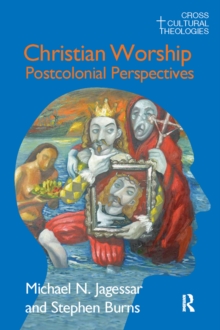 | Jagessar, Michael N. Christian worship: postcolonial perspectives, Routledge, 2014.Postcolonialism has greatly influenced biblical and theological criticism but has not yet entered the realm of church worship and practice. 'Christian Worship' brings the insights of postcolonial thinking to the rituals of religious life. The book critically analyses liturgical theology through the lens of postcolonialism and explores the challenges of appropriating postcolonial perspectives in Christian worship. |
 | Raj Bharat Patta. Subaltern Public Theology : Dalits and the Indian Public Sphere. Cham, Switzerland: Palgrave Macmillan, 2023.This book delves into the public character of public theology from the sites of subalternity, the excluded Dalit (non) public in the Indian public sphere. Raj Bharat Patta employs a decolonial methodology to map global and Indian public theologies and critically analyse them and explore a subaltern public theology for India. |
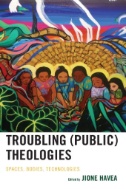 | Jione Havea. Troubling (Public) Theologies : Spaces, Bodies, Technologies. Theology in the Age of Empire. Lanham: Fortress Academic, 2023.Theologies, no matter their designations, are public measures—they disclose as well as gauge the publics (near and far) on which they stand, sit, lie, or fall. Because publics shift and mingle, theologies require reimagining, relocating, and embracing fresh insights and energies. The spotlighted spaces are in Africa, Asia, Black America, the Caribbean, and Pasifika. |
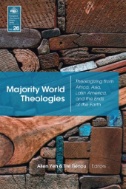 | Allen Yeh, Tite Tienou. Majority World Theologies: Theologizing From Africa, Asia, Latin America, and the Ends of the Earth Littleton: William Carey Publishing, 2018.As theology is an attempt to articulate through human language and culture and contexts the timeless truths of the eternal and transcendent God, Majority World churches have much to offer the West and the world, as they contribute to a greater understanding of the Lord. |
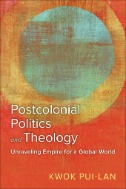 | Kwok Pui-lan. Postcolonial Politics and Theology : Unraveling Empire for a Global World. Louisville, Kentucky: Westminster John Knox Press, 2021.Kwok traces the history of the political impacts of Western theological development, and the need to shift these interlocking fields toward non-Western traditions in theory and practice, with a focus on the changing sociopolitical realities of American Empire and Sino-American competition. |
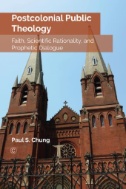 | Paul S. Chung. Postcolonial Public Theology : Faith, Scientific Rationality, and Prophetic Dialogue. Eugene, Oregon: James Clarke & Co, 2016.Chung makes the case for public theology to turn toward postcolonial imagination, demonstrating a fresh rethinking of the public and global issues that continue to emerge in the aftermath of colonialism, providing a framework for imagining a polycentric Christianity. |
 | Pal Ahluwalia. Politics and Post-Colonial Theory : African Inflections. London: Routledge, 2002.This book makes sense of the complexities of post-colonial politics, illustrating how post-colonial theory has marginalised Africa. Ahluwalia traces how African identity has been constituted and reconstituted by examining issues such as: negritude, the rise of nationalism, decolonisation. |
 | Emmanuel Y. Lartey, and Hellena Moon. Postcolonial Images of Spiritual Care : Challenges of Care in a Neoliberal Age. Eugene: Pickwick Publications, 2020.This anthology is about caring for all persons as a part of the revolutionary struggle against colonialism. As a postcolonial critique of spiritual care, it highlights the plurality of voices and concerns that have been overlooked and expands the field of pastoral and practical theology. |
Highlights from the rest of the collection
Explore our Diversification Fund acquisitions:
Barreto, Raimundo and Roberto Sirvent. Decolonial Christianities : Latinx and Latin American Perspectives. Cham, Switzerland: Palgrave Macmillan, 2019Featuring essays from distinguished Latinx and Latin American scholars, this volume brings Christian theology into conversation with decolonial theory, highlighting embodied religious practices that emerge in concrete contexts and communities. |
|---|
Brett, M., and J. Havea. Colonial Contexts and Postcolonial Theologies : Storyweaving in the Asia-Pacific. New York, NY: Palgrave Macmillan, 2014This essay collection focuses on what postcolonial theologies look like in colonial contexts, particularly in dialogue with the First Nations Peoples in Australia and the Asia-Pacific. |
|---|
De La Torre, Miguel A., and Mitri Raheb. Resisting Occupation : A Global Struggle for Liberation. Decolonizing Theology. Lanham, Maryland: Fortress Academic, 2022.International scholars explore how religious perspectives can be constructed by occupiers to justify their actions, perpetuate exploitation, and domesticate indigenous landholders, while seeking the liberative response of resistance through religion. |
Gossai, Hemchand. Postcolonial Commentary and the Old Testament. London, UK: T&T Clark, 2019.With contributors representing a spectrum of national, indigenous, and diasporic contexts, this volume integrates historical criticism, postmodernism, and postcolonial readings to obtain an informed explanation of the Hebrew Bible and the writings of early Judaism. |
Güven, Ferit. Decolonizing Democracy : Intersections of Philosophy and Postcolonial Theory. Lanham: Lexington Books, 2015Güven demonstrates how democracy is deployed as a neo-colonial tool to discipline and further subjugate formerly colonized peoples and spaces, aiming to provide a conceptual response to the crisis of democracy in contemporary world. |
Havea, Jione. Mission and Context. Theology in the Age of Empire. Lanham: Fortress Academic, 2020.Writing from minoritized settings in Africa, Asia, the Americas, and Oceania, contributors re-vision the course and cause of mission. They interweave the principles and practices of mission with the opportunities in decolonial theology and hermeneutics. |
Havea, Jione. People and Land : Decolonizing Theologies. Theology in the Age of Empire. Lanham: Fortress Academic, 2019.This book is a protest against the claims of political and religious empires. Contributors give voice to multiple causes, including transforming the usual business of theology and hermeneutics; exposing and challenging the logics and delusions of coloniality. |
Havea, Jione. Scripture and Resistance. Theology in the Age of Empire. Lanham, Maryland: Fortress Academic, 2019.Resistance against unjust cultures and imperial powers is at the heart of scripture. This collection contains reflections on resistance and the Christian scriptures, including the strategies of and energies in post- and de-colonial criticisms. |
 | Havea, Jione. Theologies From the Pacific. Postcolonialism and Religions. Cham, Switzerland: Palgrave Macmillan, 2021.This book offers engagements with topics in mainline theology that concern the lifelines in and of the Pacific (Pasifika), putting Christian teachings and scriptures, native traditions and island ways into dialogue. |
Havea, Jione. Vulnerability and Resilience : Body and Liberating Theologies. Theology in the Age of Empire. Lanham: Fortress Academic, 2020.Drawing on postcolonial, body, and liberation theologies, contributors tell their stories in the hope that they will expose cultures that make individuals and communities vulnerable, and bring change to theological institutions that conserve vulnerability. |
Heaney, Robert S. Post-Colonial Theology : Finding God and Each Other Amidst the Hate. Eugene: Cascade Books, 2019.The theologizing of colonialism, and the ongoing implications of colonialism, cannot be ignored by those who wish to understand human conflicts. Beginning with his own particular context of formation, in this book Heaney provides an accessible introduction to post-colonial theology. |
Joy, D. and J. Duggan. Decolonizing the Body of Christ : Theology and Theory After Empire? Postcolonialism and Religions. New York: Palgrave Macmillan, 2012.Focusing on multireligious, indigenous, and transnational scholarly voices, in this book, Religious studies and Postcolonial theory become critical companions in shared analysis of major postcolonial themes. |
Lenette, Caroline. Participatory Action Research : Ethics and Decolonization. Research to the Point Series. New York, NY: Oxford University Press, 2022Participatory Action Research privileges the involvement of participants as co-researchers to generate new knowledge and act on findings to effect social change. This practical, clear, and user-friendly methodology includes reflection on decolonisation in academia. |
Mbuvi, Andrew M. African Biblical Studies : Unmasking Embedded Racism and Colonialism in Biblical Studies. New York: T&T Clark, 2022Mbuvi makes the case for African biblical studies as a vibrant and important emerging distinct discipline, while also using its postcolonial optic to critique biblical studies for its continued underlying racially and imperialistically motivated tendencies. |
Mendoza, S. Lily, and George Zachariah. Decolonizing Ecotheology : Indigenous and Subaltern Challenges. Intersectionality and Theology Series. Eugene: Pickwick Publications, 2022.This book is a pioneering attempt to contest the politics of conquest, commodification, and homogenization in mainstream ecotheology, informed by the voices of Indigenous and subaltern communities from around the world. |
Persram, Nalini. Postcolonialism and Political Theory. Lanham, MD: Lexington Books, 2008This volume explores the intersection between the political and the postcolonial through an engagement with, and challenge to some of the prevalent tenets of Western political and social thought. |
Rieger, Joerg. Beyond the Spirit of Empire : Religion and Politics in a New Key. London: SCM Press, 2009How does empire mould human subjectivity, and how does it affect the understanding of humans within the whole of creation? This title analyzes the global empire in its political and economic dimensions and in its symbolic constructions of power. |
Rieger, Joerg. Theologies on the Move : Religion, Migration, and Pilgrimage in the World of Neoliberal Capital. Decolonizing Theology. Lanham: Fortress Academic, 2020.Many religions have developed in motion, with people exploring new boundaries, migrating, and being displaced. This volume examines potential tensions and solutions as theology and religion shape up in various contexts “on the move”. |
Smith, Kay Higuera, Jayachitra Lalitha, and L. Daniel Hawk. Evangelical Postcolonial Conversations : Global Awakenings in Theology and Praxis. Downers Grove, IL: IVP Academic, 2014This groundbreaking volume addresses the intersection of postcolonialism and evangelicalism. Looking at themes like nationalism, mission, Christology, catholicity and shalom, it explores new possibilities for evangelical thought, identity and practice. |
Stiebert, Johanna and Musa W. Dube. The Bible, Centres and Margins : Dialogues Between Postcolonial African and British Biblical Scholars. London: T&T Clark, 2018.Dube and Stiebert collect expressions from biblical scholars in the UK and southern African states. Contributions range from the injustices of colonialism to postcolonial critical readings of texts, placing UK and African scholarship in dialogue. |
Sugirtharajah, R. S. The Bible and Empire : Postcolonial Explorations. Cambridge, UK: Cambridge University Press, 2005This stimulating volume explores the complex relationship between the Bible and the colonial enterprise, offering practical and theoretical insights and providing compelling evidence of the continuing importance of postcolonial discourse for biblical studies. |
| | Mamdani, Mahmood. Neither Settler nor Native : The Making and Unmaking of Permanent Minorities. Cambridge, Massachusetts: Belknap Press, 2020.Making the radical argument that the nation-state was born of colonialism, Mamdani calls on us to delink the nation from the state so as to ensure equal political rights for all who live within its boundaries. |
Introductions and overviews
Looking for an
introduction to postcolonial theology and decolonization work? Try these introductory guides, overviews,
and handbooks from the CTF collection, the Hub, and the Internet
Archive.
 |
Kwok Pui-Lan. Postcolonial imagination and
feminist theology. Louisville, Ky. : Westminster John Knox Press, 2005.
Postcolonial studies argues that most theology has been formed in dominant cultures, laden with imperializing structures. An essential task facing theology is thus to 'decolonize' the mind and free Christianity from colonizing bias and structures. Kwok offers the first full-length theological treatment of postcolonial feminist theology. She explains her methodology, exploring topics including Christology, pluralism, and creation. |
|---|---|
 |
Sugirtharajah, R. S. Voices From the Margin : Interpreting the Bible in the Third World. Vol. 25th Anniversary edition. Maryknoll: ORBIS, 2016.An important resource for World Christianity, this revision to the classic text sheds new light on the Biblical concerns of traditionally underrepresented cultures and churches. Essays feature Global South applications of Biblical passages and teachings; specific considerations of given cultures and more general analysis of Biblical passages with insights into economics and social conditions in the nations of the Global South. See also Sugirtharajah's The Bible and the Third World : precolonial, colonial, and postcolonial encounters. |
 |
Sugirtharajah, R. S. The Bible and the Third World : precolonial, colonial, and postcolonial encounters. Cambridge ; New York : Cambridge University Press, 2001.This volume is the first comprehensive history of how the Bible has fared in the Third World, from precolonial days to the postcolonial period. It closely examines the works of biblical interpreters from Asia, Africa, Latin America, Europe and North America, bringing to the fore the obscure as well as the better-known interpretations, and investigating the Bible's reclamation by indigenous peoples in the postcolonial world. The volume will be an invaluable guide to anyone interested in learning about the impact of the Bible on non-Western cultures. |
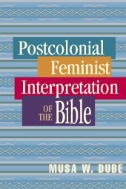 |
Dube Shomanah, Musa W. Postcolonial Feminist Interpretation of the Bible. St. Louis, Mo: Chalice Press, 2000.Noting that the ways of interpreting the Bible now practiced in the West are patriarchal and oppressive of those in other parts of the world, Dube offers an alternative interpretation that attends to and respects needs of women in the two-thirds world. In a provocative and insightful reading of the book of Matthew, she shows us how to read the Bible as decolonizing rather than imperialist literature. |
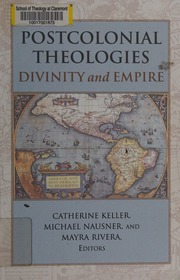 |
Keller, Catherine, Michael Nausner, and Mayra Rivera. Postcolonial theologies : divinity and empire. St. Louis, Mo.: Chalice Press, 2004.
Focusing on the relation of theology to postcolonial theory, by a wide diversity of authors, these essays are theologically constructive, not merely deconstructive or critical, in their visions for Christianity. Forming a sort of doctrinal landscape, they emerge under the themes of theological anthropology shaped by ethnicity, class, and privilege; a Christology that intersects the claims of Christ and empire; and a Cosmology that imagines a postcolonial world. |
Heaney, Robert S. Post-Colonial Theology : Finding God and Each Other Amidst the Hate. Eugene: Cascade Books, 2019.Heaney grew up in a
Northern Ireland where enmity paraded itself and policed the boundaries
between segregated identities and aspirations. Such conflict, with deep
historic roots, is inextricably linked to religion and colonization. The
theologizing of colonialism, and the ongoing implications of
colonialism, cannot be ignored by those who wish to understand human conflicts.
Beginning with his own particular context of formation,
Heaney provides an accessible introduction to post-colonial theology. |
|
Robert Beckford. Documentary As Exorcism : Resisting the Bewitchment of Colonial Christianity. London: Bloomsbury Academic, 2014.This interdisciplinary study builds upon
the insights of postcolonial studies, theological
studies and media studies to showcase the role of
documentary film in registering
complex theological ideas. Beckford narrates the complicit relationship of Christianity with
European expansion, slavery, and colonialism, characterising this
form of historic Christian faith as 'colonial Christianity'. He identifies practices of
colonialism and their present impact upon African Caribbean Christian
communities in Britain, and demonstrates the emancipatory impact of filmmaking. |
|
Segovia, Fernando E. Decolonizing biblical studies : a view from the margins. Maryknoll, N.Y. : Orbis Books, 2000.
Biblical studies has
seen radical changes in the conception, practice and teaching of
biblical criticism. Segovia
analyzes the models and practices at work in biblical criticism and
pedagogy, in particular the emerging voices of the non-Western world. By
exploring the principles that underlie all contextual readings of
scripture - Hispanic/Latino(a), Black, feminist, and Third World - he
offers a powerful challenge to the dominant paradigms of biblical
interpretation. See also |
|
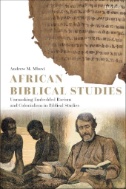 |
Andrew M. Mbuvi. African Biblical Studies : Unmasking Embedded Racism and Colonialism in Biblical Studies. London: T&T Clark, 2023.Mbuvi makes the case for African biblical studies as a vibrant
and important emerging distinct discipline, while also using its
postcolonial optic to critique biblical studies for its continued
underlying racially and imperialistically motivated tendencies. Mbuvi not only exposes and critiques these persistent
oppressive and subjugating tendencies but showcases how African
postcolonial methodologies that prioritize readings from
the perspective of the marginalized and oppressed, offer an alternative
framework for the discipline. |
| |
Lynne St. Clair Darden. Scripturalizing Revelation : An African American Postcolonial Reading of Empire. Semeia Studies. Atlanta: SBL Press, 2015.A fresh contribution to the growing body of New Testament scholarship on
empire, both ancient and modern, Darden's reading of Revelation examines
John the Seer's rhetorical strategy and imperial cult
imagery through the lens of an
African American scripturalization supplemented by postcolonial theory. This study on postcolonial African American biblical
hermeneutics addresses the hybridity of African American identity and argues that African American biblical scholarship must attend to the complex cultural negotiations of Revelation. |
| |
HyeRan Kim-Cragg. Interdependence : A Postcolonial Feminist Practical Theology. Eugene, Oregon: Pickwick Publications, 2018.This book advocates for the
inclusion of colonialism as a critical optic for practical theology and
demands a close look at how colonialism is entangled with issues of
race, ethnicity, gender, class, disability, and sexual orientation. Kim-Cragg contributes to expanding the concerns of
practical theology in ways that create healthy community for all human
beings and non-human fellow creatures. These illuminating new possibilities promise
to renew and even transform church communities through the inclusion of
often-neglected groups with whom God is already present. |
 |
Floyd-Thomas, Stacey M. and Miguel De La Torre. Beyond the pale. Reading ethics from the margins. Louisville, Kentucky : Westminster John Knox Press, 2011.How should Augustine, Plato, Calvin, Kant, Nietzsche, and Bonhoeffer be read today, in light of postcolonial theory and twenty-first-century understandings? This book offers a reader-friendly introduction to Christian liberationist ethics by having scholars "from the margins" explore how questions of race and gender should be brought to bear on twenty-four classic ethicists and philosophers. |
Further explorations
Want to delve deeper
into this subject? The CTF database has over 100 titles focusing on postcolonial studies, postcolonial theology, and decolonization. These books offer a broad
range of different approaches, disciplines, and perspectives across
different religious denominations and time periods. Here are just a few
highlights from this collection.
 |
Biblical Studies |
Tat-siong Benny Liew, and Fernando F. Segovia. Colonialism and the Bible : Contemporary Reflections From the Global South. Postcolonial and Decolonial Studies in Religion and Theology. Lanham: Lexington Books, 2018.
This volume addresses the problematic relationship between colonialism
and the Bible. It does so from the perspective of the Global South,
calling upon voices from Africa and the Middle East, Asia and the
Pacific, and Latin America and the Caribbean. Contributors provide sharp
analyses of the past, the present, and the future: historical contexts
and trajectories, contemporary legacies and junctures, and future
projects and strategies. |
|---|---|---|
 |
Christology |
Rieger, Joerg. Christ & empire : from Paul to postcolonial times. Minneapolis, MN : Fortress Press, 2007.
Although we loathe admitting it, Christians have often, through crusade, conquest, and commerce, used the name and power of Christ to promote and justify political, economic, and even military gain. Rieger's ambitious and faith-filled project chips away at the colonial legacy of Christology to find the authentic Christ - or rather the many authentic depictions of Christ in history and theology that survive our self-serving domestications. |
| Ecotheology |
Mendoza, S. Lily, and George Zachariah. Decolonizing Ecotheology : Indigenous and Subaltern Challenges. Intersectionality and Theology Series. Eugene: Pickwick Publications, 2022.This book is a pioneering attempt to contest the politics of conquest, commodification, and homogenization in mainstream ecotheology, informed by the voices of Indigenous and subaltern communities from around the world.
|
|
| Ethics |
Brazal, Agnes M. A Theology of Southeast Asia : Liberation-Postcolonial Ethics in the Philippines. Duffy Lectures in Global Christianity. Maryknoll, NY: ORBIS, 2019.Brazal explores many diverse facets of theology and ethics in the Philippines, including cyberethics and populism, traditional Bai theology, and the struggles of indigenous peoples. This rich work will be of interest not only to Filipino theologians but also to all those interested in doing vernacular, liberation, and postcolonial theologies. |
|
 |
Feminist Theology |
Kwok, Pui-lan and Laura E. Donaldson. Postcolonialism, feminism, and religious discourse. New York : Routledge, 2002.
Reaching across a broad range of religious traditions and diverse disciplines, contributors examine white feminist theology's misappropriations of Native North American women, Chinese footbinding, and veiling by Muslim women, as well as the Jewish emancipation in France, the symbolic dismemberment of black women by rap and sermons, and the potential to rewrite and reclaim canonical stories. |
| |
Mission | Havea, Jione. Mission and Context. Theology in the Age of Empire. Lanham: Fortress Academic, 2020.Writing from minoritized settings in Africa, Asia, the Americas, and Oceania, contributors re-vision the course and cause of mission. They interweave the principles and practices of mission with the opportunities in decolonial theology and hermeneutics. |
 |
Politics |
Reddie, Anthony. Theologising Brexit: a liberationist and postcolonial critique. Routledge, 2019.This title offers a comprehensive analysis of the theological challenge
presented by the new post-Brexit epoch. The referendum vote for Britain
to leave the EU has led to a seismic shift in the ways in
which parts of the British population view and judge their compatriots. The book
addresses varying aspects of what it means to be British and the ways in
which churches in Britain and the Christian faith could and should
respond to a rising tide of White English nationalism. |
 |
History |
This book introduces the history, literature, and
theology of the Hebrew Bible, reading these texts through the lens of postcolonial interpretation. The book showcases not only how cultural
and socio-political forces shaped ancient Israel and the worldviews of
the early Jews but also the impact of imperialism on modern readings of
the Bible.
Covering a broad history from 1300 BCE to 72 CE, the authors show how imperialism in the Ancient Near East provides a window
through which to see the forces and effects of imperialism in modern
history.
|
| |
Pastoral and practical theology |
Emmanuel Y. Lartey. Postcolonializing God : New Perspectives on Pastoral and Practical Theology. London, England: SCM Press, 2013.Postcolonializing God examines how African Christianity can be truly a postcolonial reality and explores how people who were colonial subjects may practice a spirituality that bears the hallmarks of their authentic cultural heritage, even if that makes them distinctly different from Christians from the colonizing nations. |
| |
Preaching |
Sarah Travis. Decolonizing Preaching : Decolonizing Preaching The Pulpit As Postcolonial Space. Eugene, Oregon: Cascade Books, 2014.Travis argues that sermons have a role in shaping the identity and ethics of listeners by helping them formulate responses to empire and colonization. This book offers preachers and other practical theologians a gentle introduction to colonial history, postcolonial theories, and Social Trinitarian theology, while equipping them with tools to decolonize preaching and strategies for preventing, resisting, and responding to colonizing discourse. |
Looking for further resources on this subject?
Explore these online bibliographies, reading lists, and digital resources:
Reading lists
Post-Colonial Theology subject guide - University of Pretoria
Decolonizing Theology subject guide - University of Pretoria
Postcolonial Liberation Theology - definition and reading list from Global Social Theory
Got any feedback on this resource page? Think we've missed something crucial? Spotted any broken links? Please get in touch at library@theofed.cam.ac.uk
All text blurbs adapted from material provided by the publisher.